
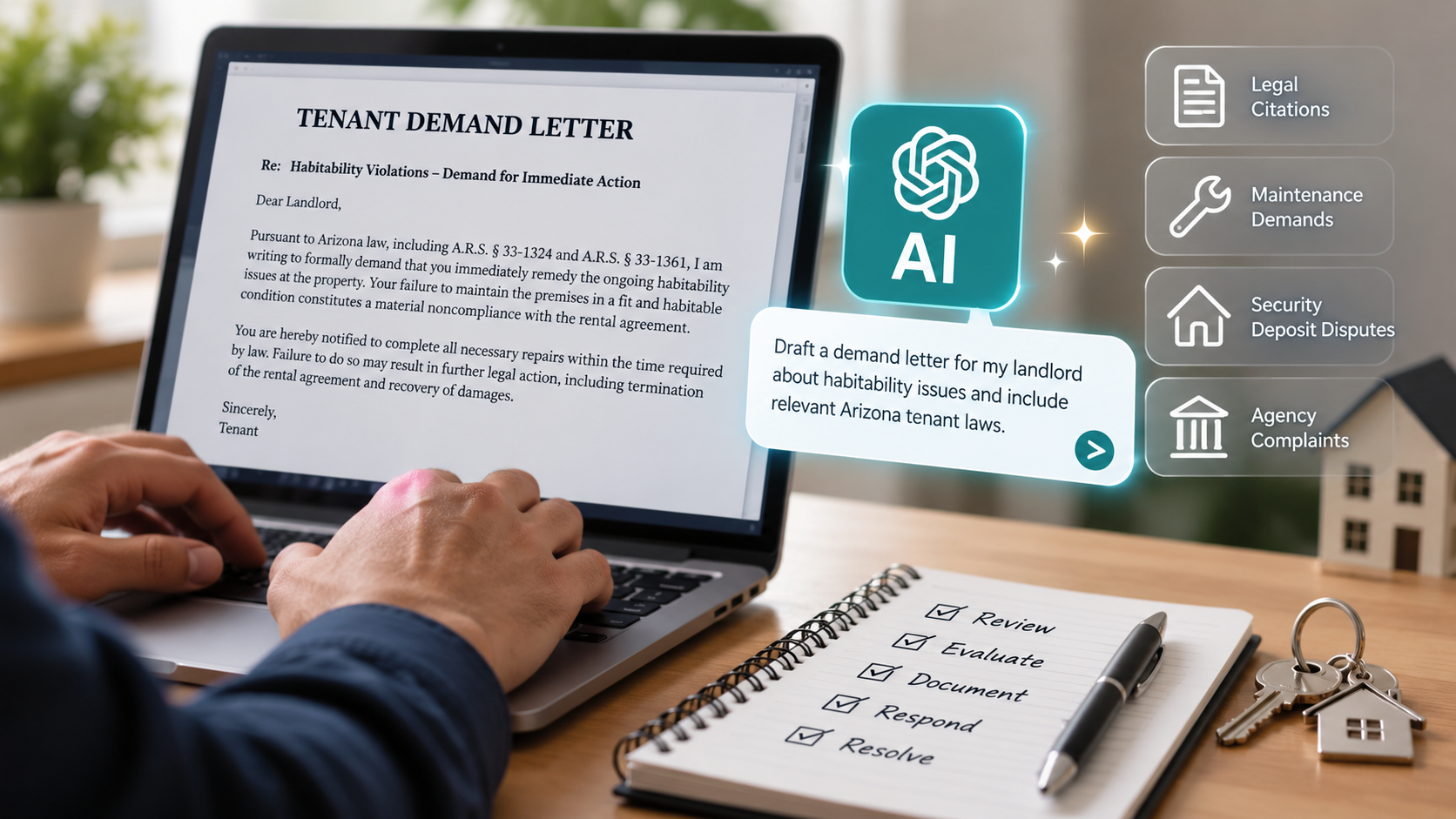
Imagine receiving a three-page letter from a former tenant disputing a security deposit deduction. The letter cites Nevada statutes, challenges individual charges, demands a refund, and warns of possible legal action.
A few years ago, preparing such a document might have required substantial research or professional assistance. Today, artificial intelligence can generate one in minutes.
At Rentals America, we’re observing a noticeable change in tenant correspondence. Complaints are becoming more frequent, increasingly detailed, and often appear to have been drafted using AI tools.
According to Zillow’s October 2026 Consumer Housing Trends Report, 78% of recent renters use AI at least occasionally. Among recent renters who used AI during their rental journey, 45% used it for personalized lease questions. These figures do not measure tenant disputes, but illustrate the growing use of AI for housing-related questions.
For Las Vegas landlords, the question is how to respond when that information becomes the basis for a formal complaint.
AI Is Making Formal Complaints Easier to Prepare
Disputes involving rental properties aren’t new. Residents have always questioned charges, requested repairs, and disagreed with lease interpretations. What’s different is the accessibility of sophisticated written arguments.
A resident can now ask AI to prepare a demand letter, identify potentially relevant laws, or draft a complaint to a regulatory agency. The resulting correspondence may look like it came from an attorney, complete with legal terminology and references to statutory remedies.
In our experience, residents are becoming more willing to make formal demands and escalate disagreements, sometimes before working through the established process with their property manager. This doesn’t mean their concerns should be dismissed. Some complaints are justified, and AI can help residents understand legitimate protections. However, a polished presentation doesn’t establish that the legal analysis is accurate.
Security Deposit Challenges Are Becoming More Detailed
Security deposit disputes remain one of the most common sources of disagreements between landlords and residents. AI makes it easier for former tenants to question cleaning charges, challenge repair deductions, and argue that certain conditions constitute normal wear and tear.
Nevada law establishes requirements for security deposit deductions and accounting, including limitations on charges for ordinary wear and tear. Landlords should be able to explain and support the deductions they assess.
But an AI-generated argument may overlook the property’s actual condition, previous inspection records, or evidence of tenant-caused damage. At Rentals America, increasingly detailed objections can require substantial time to review and answer, even when the charges are supported by photographs and invoices.
This is why maintaining accurate property records is so important. Our article, Normal Wear and Tear vs. Tenant Damage, explains how Las Vegas landlords can evaluate damage, consider the age of materials, and support reasonable deductions.
Maintenance Complaints and Legal Demands
Maintenance concerns are another area where AI-assisted letters are becoming more noticeable. A tenant experiencing a plumbing problem, cooling issue, or appliance failure may use AI to prepare a formal notice alleging a violation of landlord obligations.
Nevada law requires landlords to maintain rental properties in accordance with applicable habitability and maintenance requirements. However, the law also establishes procedures and distinctions that depend on the type of problem.
For example, Nevada has specific statutory provisions addressing essential services and habitability concerns. Those requirements shouldn’t be confused with the process for every routine maintenance request. An AI-generated demand may overlook these differences or suggest that a particular remedy is immediately available without considering the required conditions.
Our experience has shown that residents sometimes rely on incomplete information when deciding whether to escalate a concern. The appropriate response is to determine the nature and urgency of the problem, verify the applicable obligations, communicate with the resident, and take appropriate action.
When AI Misinterprets the Law
AI tools can produce impressive legal explanations, but they can also make mistakes. A response may cite a statute from another state, rely on rules that don’t apply to residential rentals, or misunderstand a lease provision.
In Nevada, the relevant question is whether a cited rule actually governs the specific residential tenancy and the issue being raised. We have seen AI-assisted correspondence rely on legal provisions that do not apply to residential rental properties or that omit necessary steps. Rather than debating every citation in a long letter, we verify the applicable requirements and address the underlying concern.
Sometimes the legal reference is correct, but the conclusion overlooks important facts or required procedures. We’ve encountered these issues in tenant correspondence, making it necessary to spend additional time distinguishing legitimate concerns from inaccurate claims.
Landlords shouldn’t assume that every AI-generated legal argument is wrong. But they also shouldn’t accept a demand solely because it includes statutes and legal terminology. The validity of a complaint depends on the facts and applicable law, not how convincingly it was written.
Five Practical Recommendations for Las Vegas Landlords
Start by separating the legal language from the underlying request. Identify what the resident wants, verify the relevant facts and requirements, and respond to the actual issue. A lengthy AI-assisted argument should not distract from legitimate concerns or established procedures.
1. Don’t react to the tone. A formal demand letter may appear intimidating. Focus on identifying the actual concern.
2. Keep comprehensive records. Inspection photographs, maintenance histories, invoices, lease documents, and communication records help establish the facts.
3. Follow Nevada’s requirements. Confirm that your response complies with applicable Nevada law, including relevant maintenance, notice, and security deposit provisions.
4. Address the underlying issue promptly. Investigate legitimate concerns and communicate clearly.
5. Know when to involve an attorney. Formal legal notices, agency complaints, and significant disputes may require professional legal guidance.
Why Professional Management Still Matters
Technology can make legal information easier to access, but resolving rental disputes still requires judgment, accurate records, and an understanding of the circumstances. For individual landlords, reviewing a lengthy AI-assisted demand letter can be time-consuming and stressful.
At Rentals America, our Las Vegas property management team uses established procedures for maintenance, inspections, resident relations, and security deposit accounting.
We’re seeing more detailed correspondence, but our response remains focused on the fundamentals: investigate the concern, review the evidence, follow applicable law, and communicate professionally. Our goal isn’t to debate the wording of an AI-generated letter. It’s to address the issue correctly.
The Bottom Line
AI is changing how residents challenge landlords, and property owners should expect sophisticated correspondence to become increasingly common. Some of these challenges will raise valid concerns. Others may rely on incomplete information or misunderstand the law.
The best response is neither to dismiss the complaint nor to be intimidated by it. Focus on the facts, follow established procedures, and address legitimate concerns professionally.
Those principles have always been important in property management, and they’re unlikely to change no matter how advanced AI becomes.